The Best Communication Books I Read in 2025
💡 To change your culture, change your conversations.💡
Come experience our community or a free event.
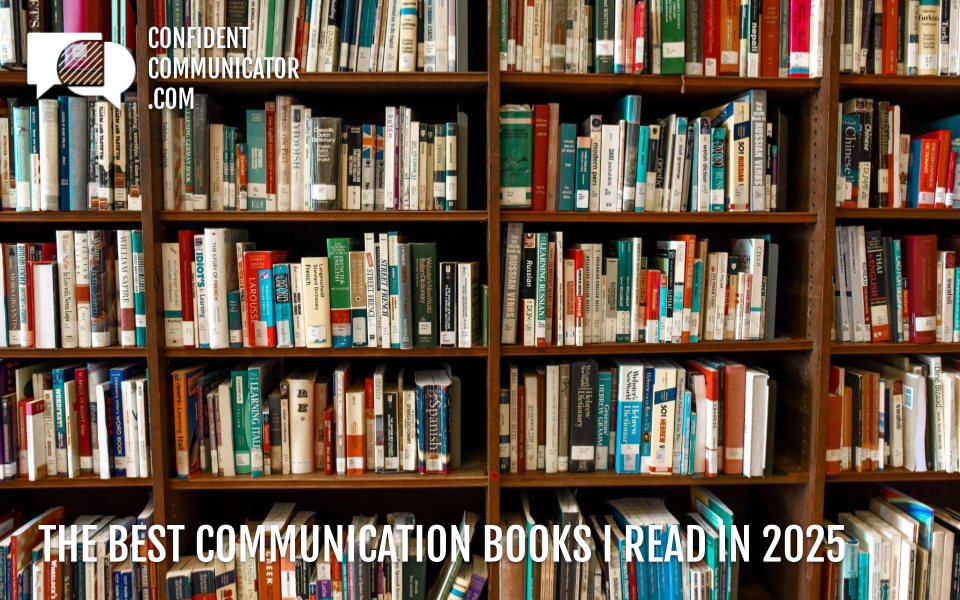
For my last 2 Minute Tip of the year, I always look back at the books that shaped how I coach, write, and show up.
This year’s list covers everything from brain science to leadership blind spots to the psychology of seduction. Some surprised me. A few challenged me. All left a mark on how I think about communication.
Here are the ones I recommend:
Thinking, Fast and Slow – Daniel Kahneman
The classic holds up. My biggest takeaway? If you want people to act differently, don’t just give them data — help them feel it.
Fast thinking = instinctive, emotional, lazy.
Slow (deep) thinking = deliberate, rational, rare.
What I’m incorporating: Communicate with clarity for System 1, but build in framing for System 2.
Nine Lies About Work – Marcus Buckingham & Ashley Goodall
This book blew up a few HR clichés for me, especially the lie that “people need feedback.”
What people need is attention, not correction.
Change doesn’t come from performance reviews, but from ongoing, real-time communication.
What I’m incorporating: Praise people for what’s real, not just what's ideal. Feedback says more about the giver than the receiver. You only need 8 questions to measure the impact of communications training.
The Art of Seduction – Robert Greene
Drama. Swagger. Strategy. Manipulation. Plenty of insights about framing, pacing, and emotional control. Seduction isn’t always sexual, it’s about attention and influence.
What I’m incorporating: Lead, don’t chase. Create desire through confidence and mystery.
Cues – Vanessa Van Edwards
This outstanding book sharpened how I read people…and how I train non-verbals.
Facial expressions, vocal tone, body language — it’s all data.
Trust isn’t just heard. It’s seen.
Micro-cues shape how people feel about your message before they understand it.
What I’m incorporating: Be intentional about balancing competence and warmth. (By the way, these two elements show up again and again in communications research and books.)
The Courage to Be Disliked & The Courage to Be Happy – Two Books By Kishimi & Koga
These books distill the principles of Alfred Adler, one of the founders of modern psychology. It’s a liberating take on how to live with clarity and self-respect — even if others disapprove. The Courage to Be Disliked might be my favorite this year.
Much of our anxiety and frustration comes from interfering with tasks that aren’t ours, like trying to control others' reactions, choices, or feelings.
You are not controlled by your past, and you don’t need approval to live meaningfully.
Focus on your own behavior and boundaries.
Happiness comes not from status, but from contributing to others, what Adler called “community feeling.”
What I’m incorporating: Don’t own others’ tasks, get fulfillment from serving your community, and rewrite your story from purpose.
Think Faster, Talk Smarter – Matt Abrahams
Gold for anyone who freezes under pressure. Structured, funny, and sticky — exactly how impromptu speaking should feel. A great resource for those “put on the spot” moments.
Structure is the antidote to panic.
The “What? So what? Now what?” framework.
What I’m incorporating: When you’re stuck, start with “What I want you to know is…”
Us: Getting Past You & Me – Terrence Real
A relationship book with plenty to use if you’re navigating power, voice, and connection at work or at home. Thank you, Thea, for the recommendation!
“You’re not the problem. The pattern is.”
In conflict, shift from who’s right to what’s happening.
What I’m incorporating: All healthy relationships constantly go through three stages: harmony, disharmony, and repair. If you’re not initiating repair, you’re in an unhealthy relationship…unhealthy for you!
The Beauty of Conflict – CrisMarie Campbell & Susan Clarke
Conflict isn’t the opposite of connection, it’s the path to it. A fantastic resource for communicating through tension.
Tension ≠ trouble. Tension = truth trying to surface.
Conflict shows you what people care about.
It’s not the fight that hurts, it’s how we avoid or mishandle it.
What I’m incorporating: Learn to breathe, pause, and stay in the discomfort longer.
Helping People Change – Boyatzis et al
The best leaders don’t tell you what to fix — they help you want to grow. This book cemented the power of coaching with compassion, not compliance.
Coaching works best when it’s rooted in compassion, not critique.
People don’t grow because we diagnose them — they grow because we believe in them.
What I’m incorporating: Asking, “What matters most to you right now?” / “What’s your goal?” and listen fully.
The Brain: The Story of You – David Eagleman
A narrative tour of how your mind shapes perception. For anyone interested in attention, identity, and storytelling.
“You are your narrative.”
Memory, attention, and identity are flexible
Communication must meet people where they are.
What I’m incorporating: Don’t assume attention. Design for it.
Dare to Lead – Brené Brown
If you care about culture and hard conversations, Brené still leads the field. The section on rumbling with vulnerability is worth the cover price.
Clear is kind. Unclear is unkind.
Vulnerability is not weakness — it’s the cost of entry for trust.
What I’m incorporating: Don’t armor up before hard conversations. Lead with the heart and say the thing.
The Remix – Lindsey Pollak
A good breakdown of generational dynamics. If you manage Gen Z and Boomers in the same room, this is a good read to accompany 10 to 25, The Science of Motivating Young People.
Flexibility + curiosity = credibility.
No one wants to be “talked down to” — even if they’re 22 or 62.
What I’m incorporating: When in doubt, co-create the rules. Don’t assume shared expectations.
I hope this list and the 2 Minute Tip have helped you be more influential this year.
What books do you recommend I put on my list for 2026?
✅ Put the 2 Minute Tip into action…Become More Influential & Build A Culture Of Open Communication in our supportive online community ✅