
Use the Change Curve
🤝 Making work less weird, one conversation at a time. Join us.🤝
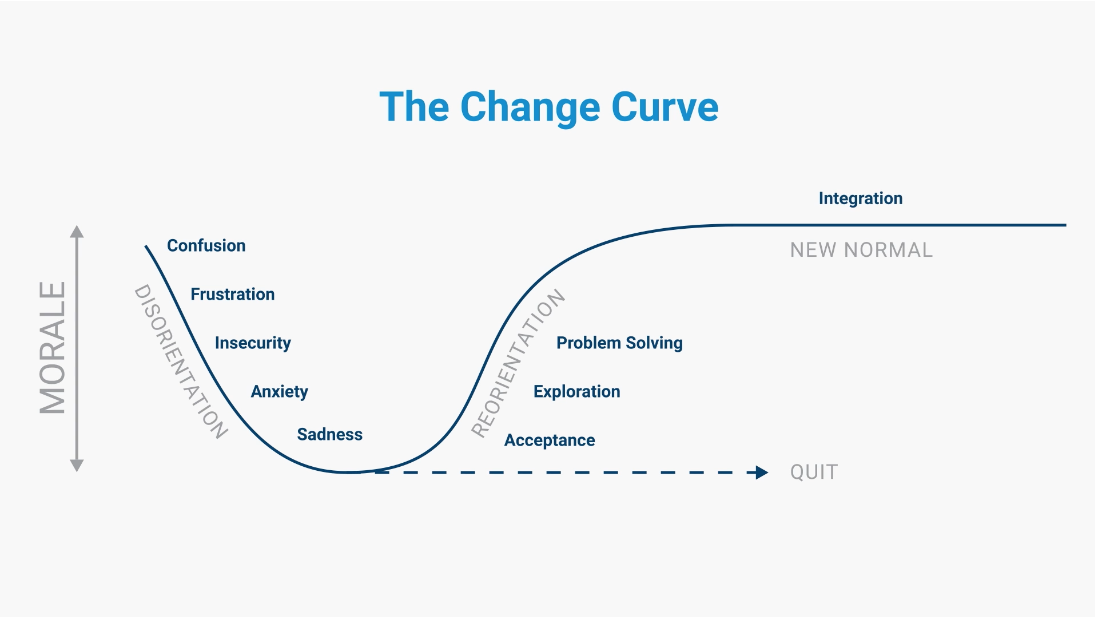
Most people think change itself is the problem.
The real challenge is that every change creates a predictable emotional response, but most leaders don't know what to do with emotions – their own or their team’s.
The Change Curve describes the natural journey people take as they adjust to a new reality:
Disorientation → "What does this mean for me?"
Reorientation → "Maybe I can figure this out."
New Normal → "This is starting to make sense."
The mistake many leaders make is trying to skip the messy middle. They push for commitment before people have processed what has changed.
This isn't something to fear. It's something to understand, to even use to your advantage.
1. Listen first
When someone reacts to change, listen for the “need beneath the no.”
Different styles tend to have different driving needs:
D: "How quickly can we move forward?" "Will this help us get results?"
i: "Who else is involved?" "How will this affect our team?"
S: "How disruptive will this be?" "What happens to the people affected?"
C: "Do we have enough information?" "How was this decision made?"
When you anticipate the different questions people will have, you can address them before resistance grows.
2. Meet their psychological needs
People don't resist change as much as they resist threats to getting their needs met, so as you communicate, emphasize what matters most to each style:
D: Progress, results, and confidence that the change is worthwhile.
i: Inclusion, collaboration, and opportunities to contribute.
S: Stability, support, and consideration for people.
C: Logic, accuracy, and a thoughtful plan.
When people feel that their needs are understood, they're far more likely to engage with the change rather than fight it.
3. Name every step of the journey
When people experience uncertainty, frustration, or doubt, remind yourself that these reactions are normal.
The Change Curve helps you understand that discomfort doesn't mean the change is failing. It often means they're still processing and adapting.
Simply naming what's happening can reduce anxiety and help people regain perspective.
4. Reinforce progress, not perfection
Instead of asking, "Are we there yet?" ask:
What's getting easier?
What's making more sense?
What have we learned so far?
What's one win we can celebrate?
People gain confidence when they can see themselves moving forward.
By understanding where people are, recognizing what they need, and helping them see progress, you can turn change from a source of resistance into an opportunity for growth.
Check out our community for more resources, coaching, and the communicating change template.
✅ Put the 2 Minute Tip into action…Become More Influential & Build A Culture Of Open Communication in our supportive online community ✅