
Us. vs. Them
🏆 Influence is a skill. Learn in the Bring DiSC to Life! community.🏆
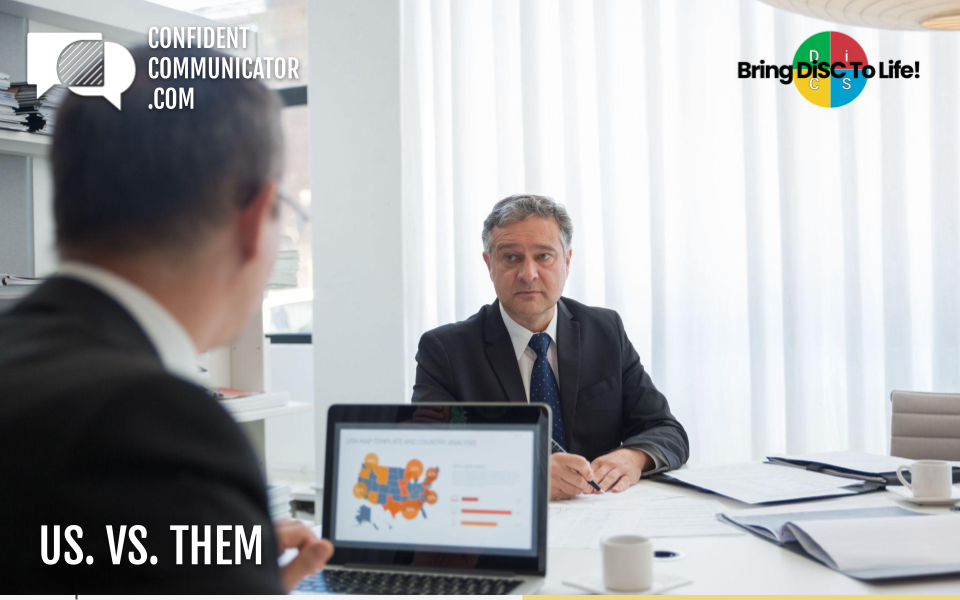
The moment we identify with a group, our brains begin dividing the world into "us" and "them."
"That's marketing’s problem."
"Leadership has no idea what it's like out here."
"Sales promised something we can't deliver...again."
Social Identity Theory explains that we naturally define ourselves not only as individuals, but also by the groups we belong to.
My department. My profession. My leadership team. My generation. My gender. My political party. My favorite sports team.
We become more loyal to our own group, assume our group's priorities are the most important, and often attribute negative motives or characteristics to other groups.
The scary part isn’t just that it happens automatically. It’s that SIT is soooo easily exploited.
In one famous experiment, psychologist Henri Tajfel assigned people to completely meaningless groups based on preferences for abstract artwork. Within minutes, participants began favoring members of their own group over the other group.
No history. No conflict. Just a label.
Imagine how much stronger those identities become after years in Finance, HR, Operations, Engineering, or Sales.
This is why many workplace conflicts can be resolved when seen as identity problems.
Sales thinks Operations is inflexible. Operations thinks Sales overpromises.
Leaders think staff resist change. Staff think leadership live in fantasy land.
Patrick Lencioni writes in The Five Dysfunctions of a Team that a team cannot truly focus on collective results until its members are willing to put the organization's success ahead of their own department, budget, status, or personal ambitions.
Fortunately, you have more influence than you realize.
Here’s a simple strategy to replace "they" with "we."
Instead of:
"Leadership wants us to..."
Try:
"As an organization, we've decided..."
Instead of:
"HR says we have to..."
Try:
"Let's figure out how we can make this policy work well for everyone."
Find the mutual objective to overcome silos.
✅ Put the 2 Minute Tip into action…Become More Influential & Build A Culture Of Open Communication in our supportive online community ✅