
How to correct mistakes without threatening identity
🎯 If this hit home, you belong in the Community.🎯
They defend themselves even when they know they’re wrong.
That’s ego. Threatened identity.
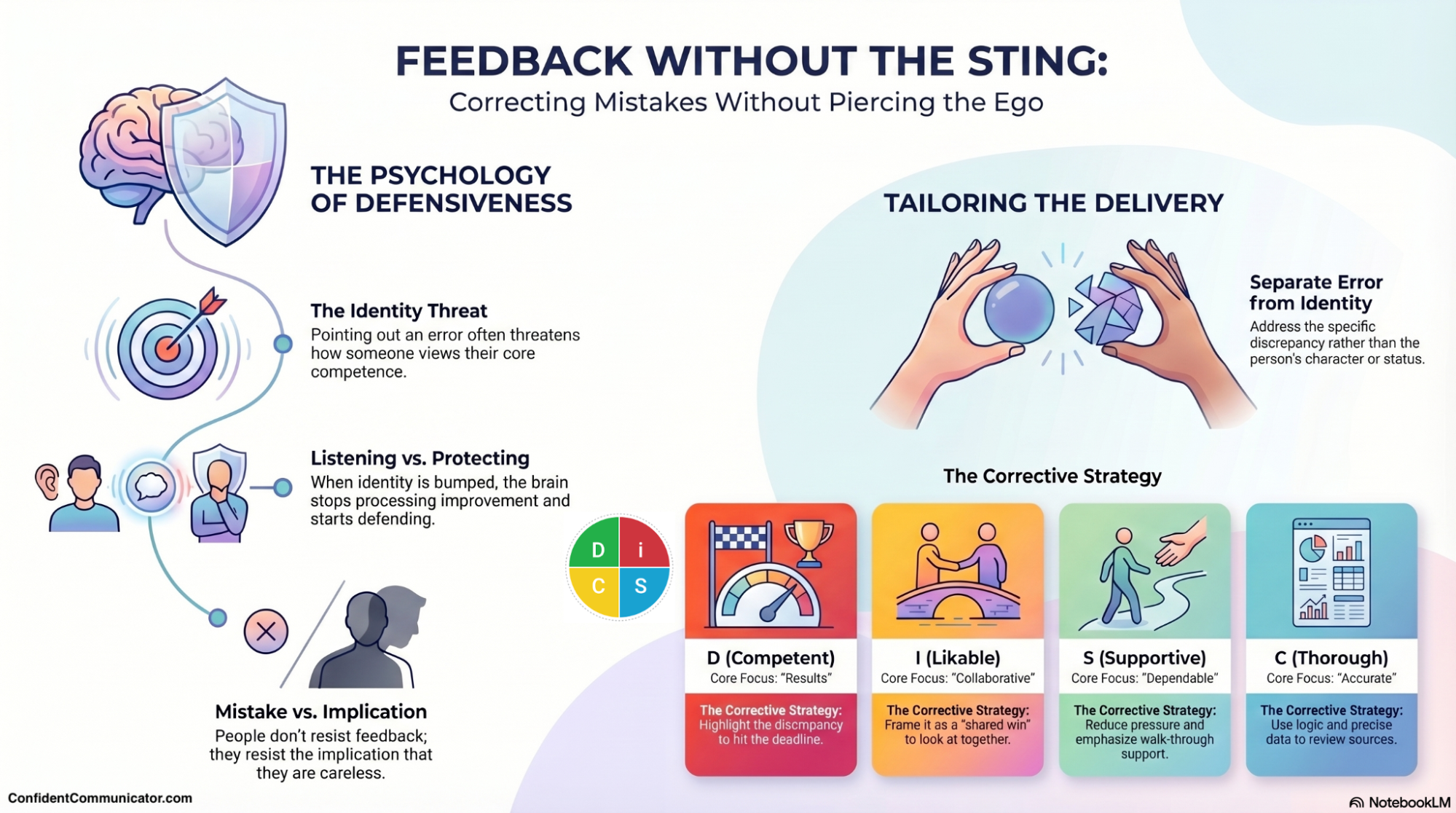
When you point out an error, you’re often doing more than correcting behavior—you’re threatening how someone sees themselves.
They may think of themselves as competent and getting the job done (D style), likable and collaborative (i style), supportive and dependable (S style), or thorough and accurate (C style).
The moment your feedback bumps into their identity, their brain shifts from listening to protecting.
They stop hearing you and start defending who they believe they are.
Most people don’t resist feedback. They resist the implication behind it.
“This is wrong” is heard as:
“You’re careless”
“You’re not who you think you are”
Now you’ve got a debate instead of a solution.
And there’s a cost.
The more someone feels judged, the less they can actually process what you’re saying. Their mental energy goes to defense, not improvement.
So even if you’re right…you lose.
A better move is to separate the error from the identity.
D style (competent, results-focused): Focus on results and resolution.
“There’s a discrepancy in the numbers—we need this aligned to hit the deadline.”
I style (likable, collaborative): Make it feel like a shared win.
“Hey, I think we may have missed something here—can we look at it together?”
S style (supportive, dependable): Reduce pressure. Emphasize support and stability.
“I noticed something we may want to adjust—can we walk through it together?”
C style (thorough, accurate): Respect their need for correctness and clarity by using their need to be seen as an expert.
“There’s a discrepancy in line 3—can we review the data source to make sure it’s accurate?”
Same principle. Different delivery.
You can correct the mistake without correcting their identity.
✅ Put the 2 Minute Tip into action…Become More Influential & Build A Culture Of Open Communication in our supportive online community ✅